Scorecard Columns Are Not Decoration
Cricket scorecard columns make an innings easier to follow by separating each batter’s record, extras, bowling figures and the team total on the page.
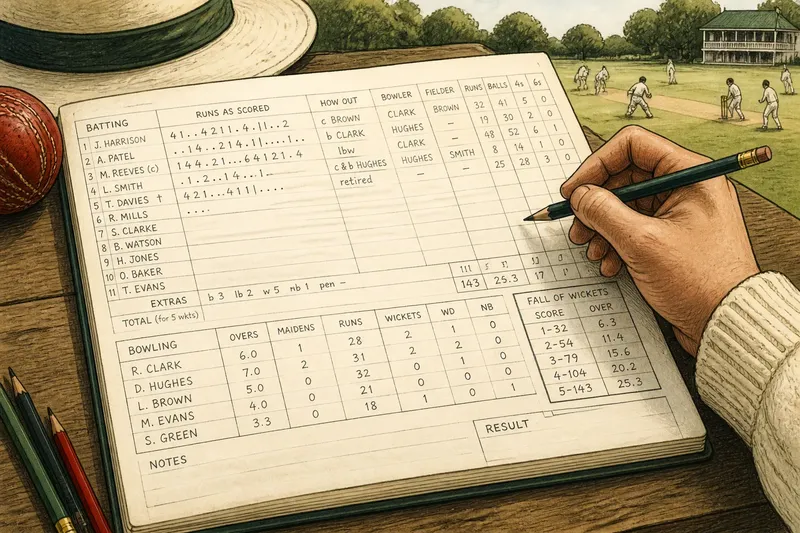
Cricket scorecard columns make an innings easier to follow by keeping a batter’s record, team extras and bowling figures in distinct places. A printed card is not merely a space for noting events: its ruled fields tell the eye what belongs together and where to look next.
Follow a card during an innings and its structure becomes apparent. Each batter has a row, extras sit apart from individual scores, and a separate entry records the team total. Each mark gains meaning from its position as well as its shape.
Rows give each batter a visual address
A scorecard’s main batting table usually gives every batter a row, with the name at the left. Across that row, recurring columns record how the batter was dismissed, who was involved in the dismissal, runs scored and, depending on the card, balls faced or boundaries. The exact headings vary, but the repeated arrangement makes the table legible.
Scanning down the names gives a sense of who entered and how far each innings extended. Reading across one row reveals an individual account. Down the page, the reader compares players; across it, the reader follows one player’s record.
The dismissal field connects a name to an event in the innings. A notation may identify the kind of dismissal, while a fielder’s name can show who took part. Keeping this information beside the batter’s name helps prevent confusion when wickets fall close together.
Grouped columns distinguish kinds of information
Columns often sit beneath broader headings. A batting heading may cover smaller spaces for boundaries, while a bowling section may group overs, maidens, runs conceded and wickets. The larger heading establishes a category; the smaller columns distinguish the details within it.
This grouping matters because the card records different contributions at once. A batter’s runs belong in that batter’s row, while extras are usually entered separately. Bowling figures record runs charged to each bowler and wickets credited to them; they are not another version of the team total. The innings total includes the team’s runs from batters and extras, subject to the scoring record, while bowling figures describe individual bowlers’ contributions.
Vertical rules, spacing and short headings help the reader recognise these divisions. A heavier line may mark the end of a section, and open space can separate batting from bowling. Even on a compact card, the eye can learn the pattern: names on one side, individual batting details alongside, and totals and bowling information in their own blocks.
Repeated marks make the page scannable
Repetition is the scorecard’s quiet organising tool. Each batter receives the same sequence of fields, and overs can be recorded in a consistent way. Once the pattern is familiar, a reader can scan the page without returning to every heading.
Repeated marks also make differences easier to notice. A row with several boundary entries looks different from one built mainly from running between wickets. A sequence of wicket notations may catch the eye before the reader checks each figure. Those impressions are prompts to read more closely, not substitutes for doing so.
Say you are keeping an invented club scorecard, and a batter retires after a steady innings as a new player comes in. You enter the first batter’s figures in that player’s row, then record the new batter in the next available row; the visible result is a clear change of personnel without moving earlier marks or combining two accounts.
Totals act as checkpoints between sections
Totals give readers places to pause and orient themselves. The innings total brings together the team’s score, including extras, while bowling figures show the runs conceded and wickets credited to individual bowlers. These entries relate to the same passage of play, but answer different questions.
Subtotals and end-of-innings summaries can make a long card easier to follow. A reader can locate a break or the fall of wickets without retracing every ball. The card is both a record of individual actions and a set of checkpoints through the innings.
It is not worth making every mark visually striking. Decorative symbols, extra colours and elaborate borders can compete with the figures, particularly on a compact card. Clear headings, consistent spacing and legible writing do more for the reader.
Layout shapes what readers notice first
A wide name column makes player identities easy to locate, while a narrow dismissal field encourages brief notation. A boxed total or one placed at the end of a section becomes a natural stopping point. Those choices influence how the page is read, even when the underlying record stays the same.
Printed cards and digital displays make different compromises. Paper can show many rows and categories at once, but small type or cramped ruling may blur the groups. A screen can reveal details progressively, yet hiding columns behind tabs may make comparisons less immediate. In either format, related information is easiest to read when it remains visibly connected.
For a personal or club card, ask whether the intended reader can distinguish a batter’s record, team extras, bowling figures and the innings total. A spare notes field can help, provided it does not disrupt the repeated structure.
What should a reader look for in a scorecard?
Start by identifying the batting rows, then check where the card records extras, the innings total and bowling figures. The questions below focus on how those parts work together.
Why are batters written in separate rows?
Separate rows keep each player’s figures together and make comparison straightforward. They also preserve the sequence of entries, helping a reader follow who contributed during an innings.
Why are extras kept apart from individual batter figures?
Extras are team runs that are not credited to an individual batter, so a separate entry keeps the personal score distinct. Reading that entry alongside the batter rows helps explain the innings total.
What do grouped bowling columns help explain?
They keep a bowler’s workload and outcomes together, so readers can compare bowling records without confusing them with batting figures. Runs conceded and wickets credited describe that bowler’s contribution, not the team’s innings total.
How can a scorecard be made easier to read?
Use clear headings, a consistent order of columns and enough space to keep marks within their intended fields. Choose notation the people using the card understand, and keep decoration from crowding the record.
Use the structure before adding more notation
When choosing or adapting cricket scorecard columns, begin with the reader’s route through the page: find a batter, follow the row, locate the innings total, then compare the bowling block. The columns are not decoration; their grouping, repetition and spacing turn scattered marks into a record that can be followed and revisited.