Keeping a Match Ticket as a Small Memory
Keeping a match ticket as a small memory protects the paper and preserves the personal details the printed stub cannot carry on its own.
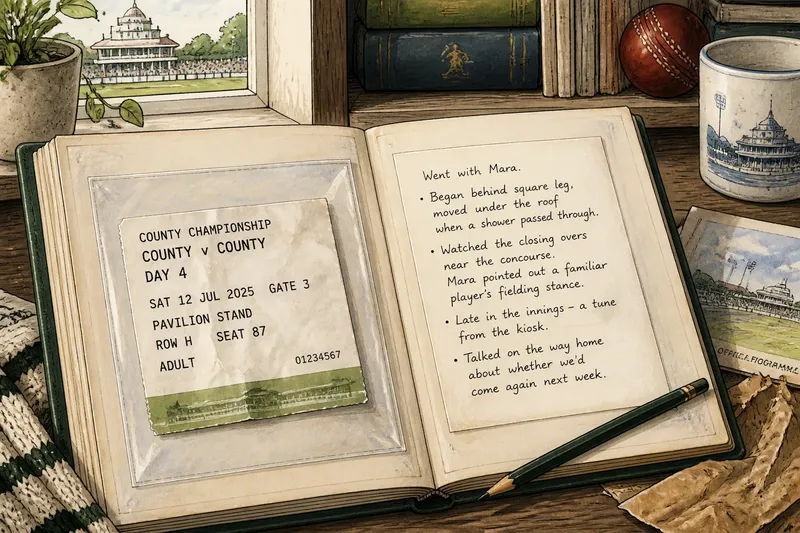
Keeping a match ticket as a small memory works best when the paper has a safe home and the day has a few words of its own. A ticket names the fixture and ground; a separate note can recall who stood beside you, where you watched and what stayed with you afterwards.
Say you return from a county match with a creased paper ticket in your coat pocket. Its print is clear, and you remember watching the closing overs with a friend. A modest plan can protect the ticket while preserving those details without turning the afternoon into a display project.
Look closely at the ticket before storing it
Check whether the ticket is thermal paper, card or a perforated stub. Thermal print can be especially vulnerable to heat, light and pressure, so the material helps determine where and how to keep it.
A fold or softened edge may be part of the ticket’s history. Do not try to make it look untouched by pressing out creases, trimming edges or applying tape. If you see loose dirt, use a clean, soft brush gently; avoid rubbing the printed face or using cleaning fluids.
For the imagined county ticket, you leave the crease alone and place it in a clean paper sleeve with no adhesive touching the surface. The print remains visible, and the paper is not forced flat.
Choose a ticket home that suits your habits
An album, box, frame or envelope can all work, but each suits a different way of keeping a memory. Choose according to whether you want to handle the ticket, see it regularly or store it quietly with other keepsakes.
- Paper album: Check that the sleeves are intended for paper keepsakes and have no adhesive surface; if they do, choose a different album or place the ticket in a separate sleeve.
- Lidded box: Check that the ticket can rest in a plain paper folder without being pressed by other objects; if the box is crowded, remove unrelated items or use a roomier container.
- Frame: Check that the ticket will not touch the glazing and that the frame can be kept away from bright light; if either condition is impractical, store it in an album or box instead.
- Keepsake envelope: Check that the envelope is uncoated and large enough to hold the ticket without folding it; if it is tight or lined with a sticky surface, use a paper sleeve or folder.
- Storage location: Check whether the spot is exposed to direct sun, damp or heat; if it is, move the ticket to a dry, shaded place such as a shelf away from a radiator.
- Nearby objects: Check whether anything could stain, press on or transfer colour to the ticket; if so, separate it with a clean folder or store it elsewhere.
For the imagined ticket, you choose an album with a clean sleeve and no sticky page. You leave out the programme and food wrappers, which could crowd or mark the paper. A grand display is not worth the effort if it makes the ticket awkward to handle; a simple, accessible place is enough.
Write down the details the ticket leaves out
The printed information is usually administrative: a fixture, date, gate, seat or admission category. A separate note can add the personal particulars without repeating those details.
Use uncoated paper and write with a pencil or stable pen. Keep the note beside the ticket rather than attaching it, and consider prompts such as:
- Who came with you, or whom did you meet at the ground?
- Where did you watch from, and did you move during the match?
- What was the weather like, and what did you carry or wear?
- Which small moment stayed in your mind afterwards?
- What did you talk about on the way home?
In the imagined situation, you write that you went with Mara, began behind square leg and moved under the roof when a shower passed through. You add that you watched the closing overs near the concourse and noticed Mara pointing out a familiar player’s fielding stance. Those are the actual details you record; the resulting note recalls the shared afternoon without trying to retell the whole match.
Be clear about what you do not remember. If the exact over or a song from the kiosk has slipped your mind, write “late in the innings” or “a tune from the kiosk” rather than guessing. An honest uncertainty is more useful than a detail that later appears certain on the page.
Keep the ticket and note together without making them touch
Place the ticket and its note in adjacent pockets or on facing pages, leaving the printed surface clear. If the album has a caption area, use it; do not write directly on the ticket or attach the note to it.
Keep thermal tickets away from radiators, sunny windows and other hot places. Avoid damp surroundings and objects that could press against the print or transfer colour. If the ticket’s material or storage needs are unclear, follow the maker’s guidance or ask a conservator for advice about a valuable or fragile item.
For the imagined ticket, you put the album on a shaded bookshelf, with the ticket in its sleeve and the note on the facing page. The result is a readable record: the printed stub identifies the match, while the note restores the company and movement around it.
What should you know before keeping a match ticket?
Should I keep the ticket in its original condition?
Keep it as close to its present condition as possible rather than trimming, laminating or trying to remove creases. A sleeve or album can protect it without permanently changing the paper.
Can I write on the back of the ticket?
A separate note is usually the gentler choice, especially for thin or thermal paper. Writing on the ticket can press on the surface, transfer ink or obscure printed details.
Is it useful to save a digital ticket as well?
If your entry pass was digital, keep its confirmation or a clear image alongside your account of the day. The saved image retains the fixture details and design, while your note supplies the personal scene.
What should I do if the print has faded?
Keep the ticket if it still matters to you, and write down any details you can read. Do not try to darken the print with household products; let the separate note carry what the paper can no longer show.
Let the keepsake stay modest
Once the ticket is stored and the note is written, leave the arrangement alone unless there is a practical reason to change it. You do not need every object from the match or a complete account of the score; a ticket and a few remembered details can be enough.
Keeping a match ticket as a small memory gives the paper and the note separate jobs: one identifies the occasion, and the other restores its texture. In the imagined case, the shower, a friend and a changed view are the details that make this ticket belong to that particular day.